Within API companies, there’s a certain kind of person who quietly holds a lot of the presale motion together. They build the environments that make abstract products concrete, translate technical flows into something an Account Executive can confidently explain, and catch every edge case that would otherwise derail a conversation.
These are builders, fixers, connectors, and context-keepers. In the official org chart, they are usually Solutions Engineers (SEs), although today there are more names than we can count, including Sales Engineer, Solutions Architect, Solutions Consultant and likely a dozen more.
The Invisible Labor Behind Every Deal
Their work is both high-stakes and largely invisible. Every request is urgent because it’s tied to revenue; every task is critical because it influences how customers perceive the product. Nothing can be easily delegated because each conversation requires a rare blend of technical depth, product intuition, and storytelling finesse.
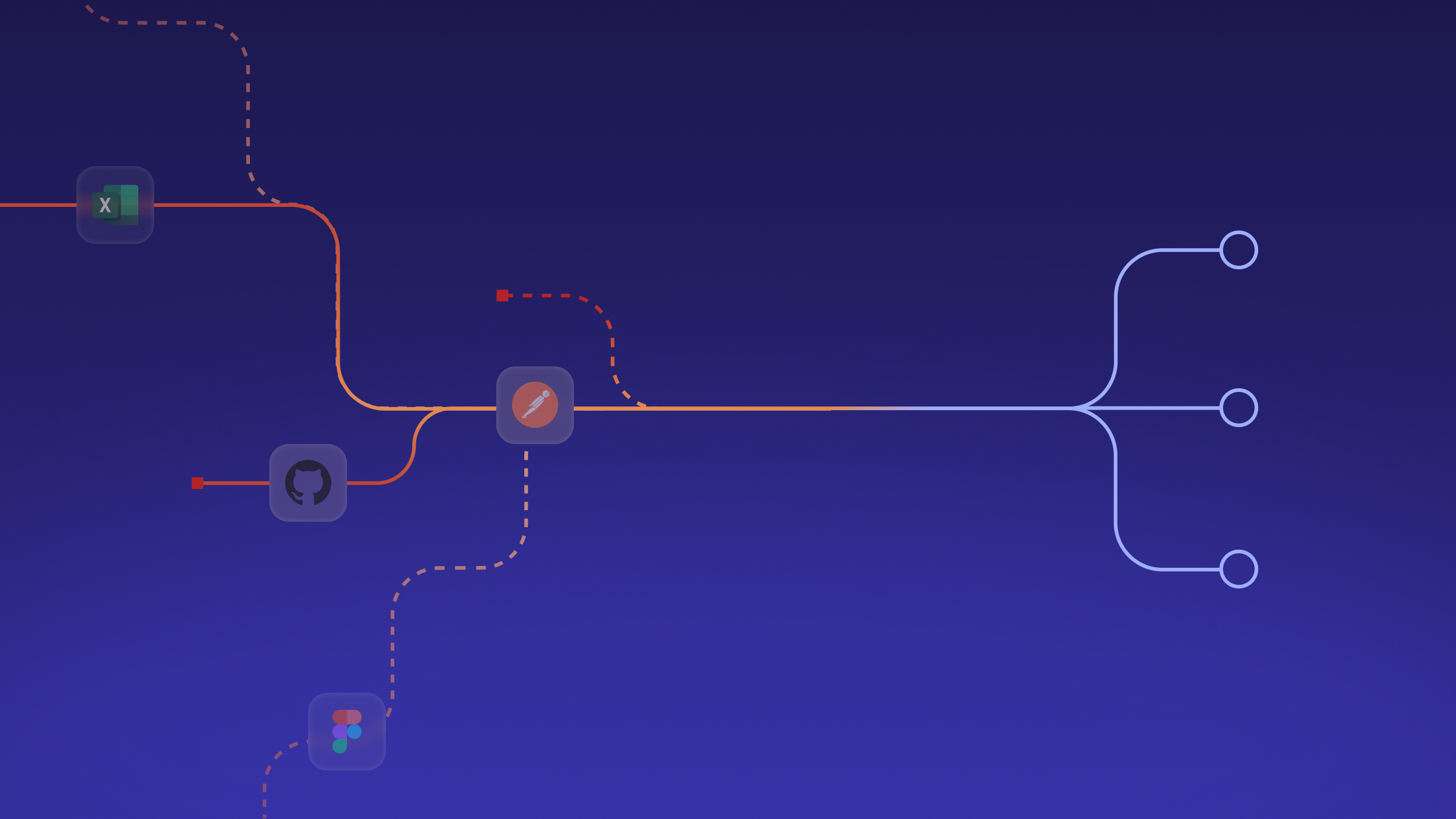
Often this results in something we call the "duct-tape demo"— a bespoke, fragile environment held together by one person’s heroic effort. These SEs act as "solutions amplifiers," trying to scale their expertise, but they are often bogged down by a backlog of custom builds that is hard to scale.
It’s a role that demands empathy in all directions: toward the product, toward the sales team, and toward the prospect trying to make sense of data, workflows, and jargon all under the pressure of time. This is a hard job. And understanding how hard it is was central to how we built Coast.
The Empathy Gap We Needed to Close
From the beginning, we realized we couldn’t design a demo platform by treating SEs as "users." We had to treat them as partners whose emotional and cognitive workloads mattered as much as their technical ones.
To make their lives easier, we needed to deeply understand what makes a demo fragile. We needed to understand why the "backlog" of demo requests causes burnout. Coast had to remove the firefighting, eliminate the need for one-off custom code, and give SEs something rare in their world: leverage. By standardizing these environments, we wanted to help SEs turn a repetitive task into a scalable asset, allowing the same team to have 10x the impact.
Salespeople’s Parallel Burden: The API Sales Paradox
But empathy doesn’t stop with the technical team. Salespeople carry their own version of this burden. They face the "API Sales Paradox": the pressure to show a product that, for the customer, doesn’t exist yet.
API sales require an unusual blend of technical curiosity and emotional intelligence. Salespeople operate in rooms where an engineer wants to see the underlying APIs while a VP of Product wants to understand how this impacts the user experience. They are responsible for guiding a prospect from confusion to clarity, often in a single call.
That’s incredibly difficult work. The best salespeople translate and anticipate where a prospect might get lost. They create psychological safety around a product that is often abstract. But without the right tools it can be hard.
Coast’s Empathy Engine
We wanted to build something that rewarded that empathy, made space for it, and scaled it.
What surprised us as Coast grew was that the empathy we built into the product began enabling empathy through the product. APIs are invisible by nature. Docs and diagrams force prospects to "decode" value and imagine what an integration might look like. But imagination is subjective.
This is why Coast is designed around the SE workflow, not around one-off demos.
Coast removes that ambiguity. By turning APIs into live, interactive workflows, we create a shared language.
- Solutions Engineers get a robust, always-on environment instead of a fragile local build.
- Salespeople get the independence to spin up personalized demos in seconds, without needing to ask permission or wait on engineering.
- Prospects get something far more valuable than an explanation: they get to experience the product in their own context, with their own data.
When everyone can see the same workflow from the front-end user journey to the back-end API calls, the discussion changes. The "I think I get it" moment becomes, "Oh, I see exactly how this works."
What Closing the Gap Really Means
Closing the empathy gap isn’t about being sentimental. It’s about taking seriously the human difficulty of communicating complex products. It’s about recognizing the invisible labor of SEs and the pressure on sales teams to "fake it" when they can't show it.
Our job is to help fuel this empathy engine. We help GTM teams show the truth of their product in a way that respects everyone involved. SEs get breathing room; salespeople get leverage; prospects get clarity. When empathy flows in all those directions, selling technical products becomes not only easier, but more human.